

It all started when...
Both Jenny and James have a heritage of market gardening that extends to their families in the Netherlands. Farming is literally in their blood! In the early 1980’s James’ parents decided to return to the land after some 20 years away from their rural roots. The farming traditions instilled into Sundog Organic Farm could be traced through them all the way back to North Holland where there still exist Vriend families thriving in horticulture.
Dennis and Ruth established the Vriend Organic Farm in 1980. It was an act of getting back to the land in defiance of industrial food. Along with James & Jenny and Dan & Kristine (August Organics), Dennis and Ruth inspired many of the young folk who worked on their myth-busting farm to think about and take joy in the fruits of the land.
Sundog Organic Farm (est. 2009) started out on the Vriend Organic Farm land and after two years there, moved to its current location in Sturgeon County, near the Sturgeon river.
Harvesting potatoes, or "Aardappelen" in Holland in the mid 1900's
Lush green fields at Vriend Organic Farm - where James grew up.
Dennis Vriend (James's dad) in a field of Vriend Organic Farm's potoatoes...Dennis was a passionate advocate for organic agriculture.
Traditional Farming tool include wheel hoes still used at Sundog today.
The Sundog farm family!
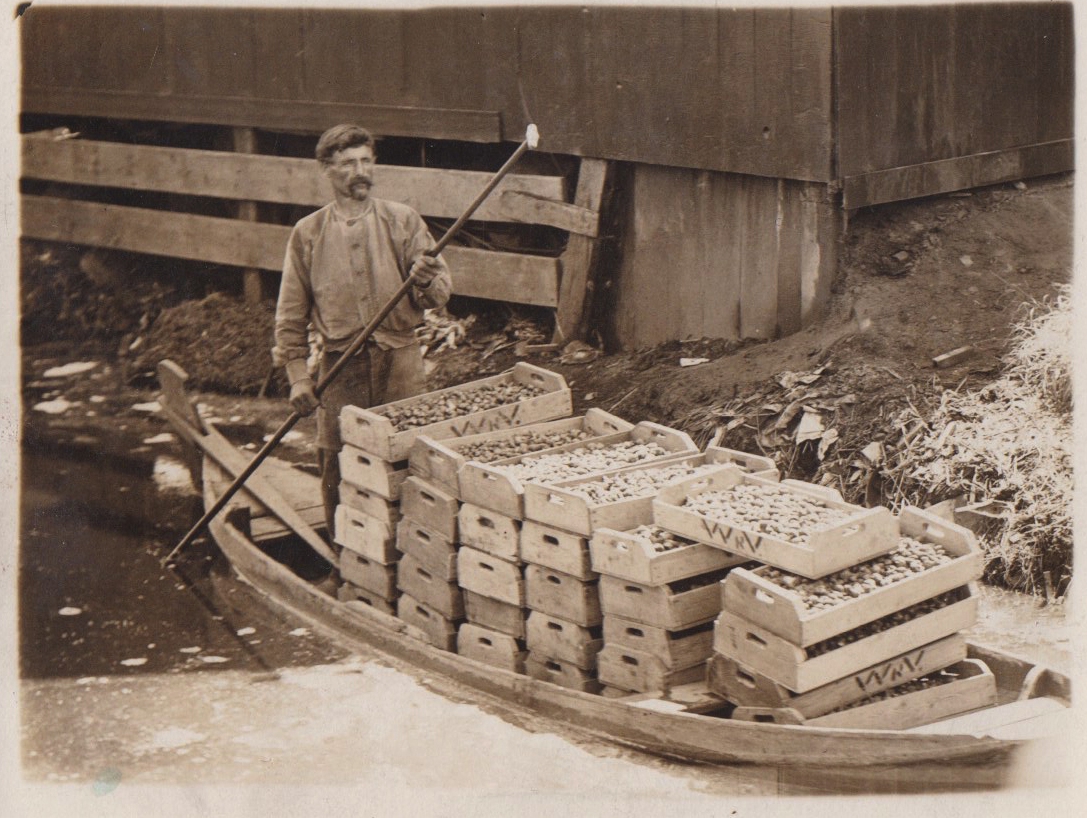
Wooden crates are an important part of the production at Sundog; their use extends back to early family farming practices in the Netherlands, where they were used especially for tulip and potato production.
Jenny (far left) harvesting beets on the Vriend's farm; working there for five seasons was great inspiration for starting up Sundog.
Harvesting potatoes, or "Aardappelen" in Holland in the mid 1900's
James's mom, Ruth(left), behind a wheel hoe.
Two kids getting a tractor ride.
Early days on Vriend Organic farm(a young James is in the background).
James's great grandparents on their farm in the Netherlands in 1946.
Early days on Sundog: erecting a windmill that James and his dad refurbished.

Harvesting pumpkinsat Vriend Organic farm; can you spot James?
Eli, James and Jenny's middle son, getting an early start with the wheelhoe.